
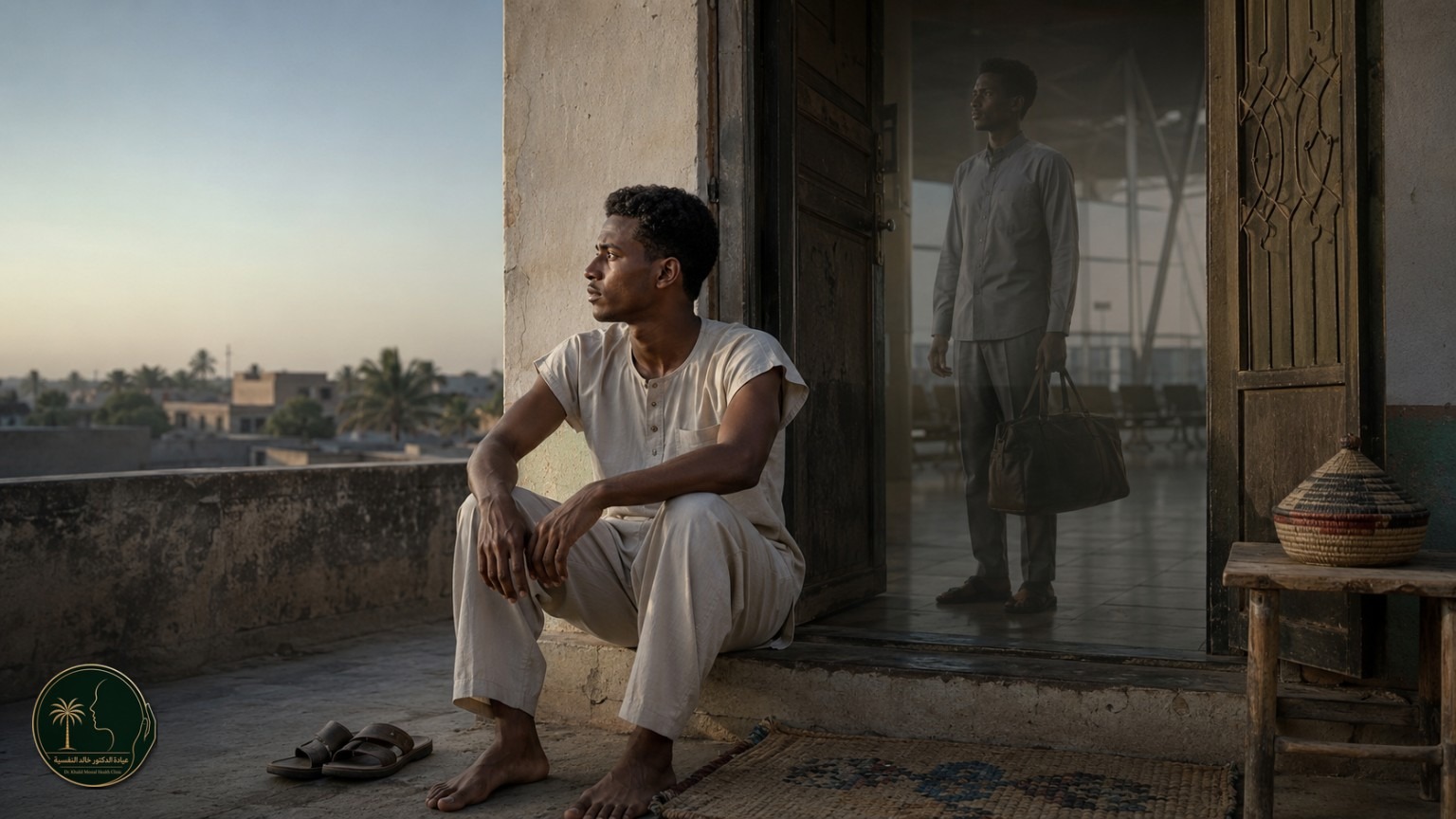
When life is waiting on war, return, travel, paperwork, money, safety, or a decision with no clear date, a temporary situation can quietly become the whole of life.
Some forms of suffering arrive suddenly.
Others accumulate so slowly that the person living through them may not recognise what is being lost.
Open-ended waiting belongs to the second kind.
It may begin with a reasonable expectation:
The war will end.
The visa will be approved.
The papers will be completed.
The money will arrive.
The family will be reunited.
The road home will reopen.
Life will begin again.
At first, waiting feels temporary. You postpone a decision, delay a plan, or tell yourself that it makes little sense to settle into circumstances that may soon change.
You will start when you return.
You will rest when the paperwork is finished.
You will rebuild when the situation becomes stable.
You will allow yourself to feel alive again when the uncertainty ends.
But the expected change does not arrive.
Weeks become months. Months become years.
What was supposed to be a temporary interruption gradually becomes the structure of everyday life.
This is open-ended waiting: waiting without a reliable timeline, without a clear ending, and often without meaningful control.
The phrase is descriptive rather than diagnostic. It does not refer to a formal psychiatric disorder, but to a recognisable human experience that can affect emotional well-being, identity, relationships, and daily functioning.
When Life Becomes Suspended
Waiting is not always inactivity.
A person may continue working, studying, raising children, caring for relatives, attending appointments, and responding to daily responsibilities. From the outside, life may appear to be moving.
Internally, however, the person may feel that none of it is the real life.
The real life is somewhere else.
It is in the home they hope to return to.
The country they hope to reach.
The opportunity they are still expecting.
The relationship they hope will be restored.
The decision they are waiting to receive.
The future remains emotionally vivid, while the present is treated as a waiting room.
This can create a painful form of suspension: physically present in one life, psychologically attached to another.
A person may hesitate to commit to work because they may leave soon.
They may avoid building relationships because their situation feels temporary.
They may postpone learning, treatment, rest, or financial planning because everything is expected to change.
They may refuse small sources of pleasure because those pleasures do not resemble the life they originally wanted.
The problem is not hope itself.
Hope can protect people.
The problem begins when hope requires the whole of life to remain on hold.
How Prolonged Uncertainty Keeps the Stress System Engaged
When a difficult ending is known, the mind may be able to begin preparing for it.
Open-ended uncertainty offers less structure.
The mind and body may remain in a state of heightened monitoring.
Should I prepare to leave?
Should I stay?
Can I spend this money?
Should I save everything?
Can I accept this job?
Can I begin this relationship?
Should I unpack the bag?
Is it safe to feel settled?
The questions are never fully answered, so the person may remain repeatedly mobilised without reaching resolution.
Over time, sleep may become lighter or more disrupted.
Concentration may weaken.
Irritability may increase.
Ordinary decisions may feel disproportionately heavy.
The person may feel physically tired while remaining mentally unable to rest.
Pleasure can also become complicated.
Someone may laugh and immediately feel guilty.
They may enjoy a meal and feel that they have forgotten those who are suffering.
They may adapt to a new place and fear that they have betrayed the home they lost.
They may begin to recover and then question whether recovery itself is a form of disloyalty.
The strain comes not only from danger itself, but from having to prepare again and again for outcomes that never become clear.
The Slow Erosion of the Self
The deepest cost of prolonged waiting is not always anxiety or exhaustion.
Sometimes it is the gradual erosion of identity.
A person once understood themselves through roles, relationships, work, ambitions, routines, and belonging.
They were a teacher, a student, a parent, a neighbour, a professional, a friend, or a person building a particular kind of future.
Then life becomes organised around uncertainty.
They become the person waiting for papers.
The person waiting to return.
The person whose family is somewhere else.
The person whose career has been interrupted.
The person who cannot answer where they will be next month.
The person who is still “temporarily” living a life that has lasted for years.
This is not only a disruption of plans.
It is a disruption of personal continuity.
The person may no longer feel fully connected to who they were before the crisis, yet they may not recognise or accept the person they have had to become.
The past feels inaccessible.
The present feels provisional.
The future feels conditional.
A life that once had a narrative becomes a collection of delays.
Over time, the person may begin to measure themselves mainly through what has not happened.
The degree was not completed.
The journey did not begin.
The home was not restored.
The family was not reunited.
The work did not resume.
The person is no longer simply waiting for an event.
They are waiting to become themselves again.
But the self cannot remain entirely preserved outside time.
It continues to change, even in suspension.
This is why open-ended waiting can feel like a slow erosion rather than a single loss. The person is not only grieving what happened. They may also be grieving the version of themselves they expected to become.
Adaptation Is Not Betrayal
Adapting to a difficult reality does not mean approving of it.
It does not mean that what happened was acceptable.
It does not mean that you have forgotten your home, your country, your people, your work, or the future you once imagined.
Adaptation means protecting yourself inside circumstances you did not choose.
You are not betraying the life you wanted by caring for the life you still have.
Building a routine is not surrender.
Sleeping is not surrender.
Eating well when possible is not surrender.
Working, studying, laughing, forming relationships, or allowing yourself moments of peace are not signs that the loss has become smaller.
They are signs that your life still deserves protection.
Adaptation is not an announcement that the current situation is permanent.
It is a refusal to let uncertainty consume everything that remains.
The day you are waiting for may eventually arrive.
But it should not find you completely destroyed by the waiting itself.
The Difference Between Hope and Self-Abandonment
There is a difference between remaining loyal to a dream and abandoning the present in its name.
Hope says:
I still want that future.Self-abandonment says:
Nothing in my life matters until that future arrives.
Hope can exist alongside action.
A person can still want to return home while building a meaningful routine where they are.
They can still hope to travel while developing skills that matter now.
They can still grieve an interrupted career while doing work that protects their dignity and capacity.
They can still miss the people they lost while allowing new relationships to become real.
Living now does not cancel the future.
Creating meaning in the present does not close the door on return.
The aim is not to replace the old dream with a smaller one.
The aim is to prevent the old dream from becoming a reason to disappear from your own life.
Not Every Pain Is a Psychiatric Disorder
Sadness in response to war is not automatically depression.
Anger after displacement is not automatically a disorder.
Anxiety while waiting for safety, money, travel, legal documents, or family reunification may be an understandable response to genuine instability.
Human beings are affected by what happens to them.
Not every painful emotion needs to be medicalised.
Not every difficult reaction requires a diagnosis.
Sometimes the central problem is not inside the person.
The person may be living within prolonged danger, uncertainty, deprivation, separation, or loss.
This distinction matters.
It protects people from being treated as though understandable suffering is a personal defect.
It also protects mental health practice from reducing social and political realities to individual pathology.
However, understandable suffering can still become severe.
Context explains suffering. It does not by itself determine whether a mental disorder is present or absent.
That requires an assessment of the pattern, severity, persistence, associated symptoms, functional impact, and immediate safety concerns.
A response may begin as proportionate to the circumstances and later start affecting sleep, work, study, relationships, physical health, or the ability to manage daily life.
Understanding the context should protect the person from unnecessary pathologising.
It should not prevent them from receiving support when support is genuinely needed.
When Professional Support May Help
A mental health assessment should not erase the reality around the person.
It should not pretend that war, displacement, financial instability, family separation, or prolonged uncertainty are merely problems of thinking.
A good assessment helps distinguish between:
- understandable distress arising from circumstances;
- patterns that are becoming clinically significant;
- existing conditions that may have worsened under pressure; and
- practical areas where meaningful change is still possible.
It should also recognise that some of the most important interventions may be practical, social, legal, financial, community-based, or medical rather than psychiatric.
Professional support may be useful when distress is persistent or worsening, sleep remains seriously disrupted, anxiety becomes difficult to control, motivation and pleasure disappear, relationships deteriorate, or daily functioning becomes increasingly difficult.
Support is not always about eliminating painful emotions.
Sometimes it is about helping a person carry those emotions without allowing them to take possession of the whole life.
Educational content can help people recognise patterns and understand their reactions.
It cannot diagnose an individual person.
It cannot determine the right treatment for someone who has not been assessed.
If there are current thoughts, plans, or actions involving harm to yourself or another person, severe loss of control, acute agitation, severe psychotic symptoms, intoxication or withdrawal from substances, or an inability to maintain basic personal safety, seek urgent medical care. Do not remain alone. If it is safe to do so, ask a trusted person to stay with you and go to the nearest emergency department or contact local emergency services.
A Life That Is Still in Progress
The future may remain uncertain.
Your life does not have to remain entirely suspended.
You may still want to return.
You may still want the war to end.
You may still be waiting for the decision, the visa, the money, the reunion, the safety, or the opportunity.
None of those hopes need to disappear.
But your present life also requires care.
- Eat as regularly as circumstances allow.
- Protect your sleep where possible.
- Move your body.
- Stay connected to people who feel safe.
- Return to one activity that once reminded you who you were.
- Make one small plan that does not depend on the uncertainty ending.
Ask yourself not only:
“What am I waiting for?”
But also:
“What part of my life is still available to me now?”
These actions are not denial.
They are not evidence that the loss was small.
They are not an endorsement of the reality you were forced to inhabit.
They are a way of preserving continuity between the person you were, the person you have had to become, and the person you may still be able to become.
Do not give the unknown complete ownership of your life.
Let the day you are waiting for find you still present in your own existence.
Not unchanged.
Not untouched.
But still standing.